
Ocala Directory Collections by Year
Ocala directory research begins with a scattered but substantial run. The Gale microfilm index identifies standalone Ocala and later Marion County editions from 1908/09 through 1960, with several missing years. R.L. Polk is documented as publisher of the 1908, 1909, and 1940 books. Later volumes widened their scope beyond Ocala to Anthony, Belleview, Citra, Dunnellon, Fort McCoy, McIntosh, Reddick, Silver Springs, and other county communities.
| Directory collection | Documented years | Repository | How to consult it |
|---|---|---|---|
| Ocala and Marion County microfilm | 1908/09-1960, with gaps | Gale index and licensed repositories | Microfilm or repository access |
| Federal directory set | 1925, 1927, 1930 | National Archives, Washington, DC | On-site or reference inquiry |
| Florida city directories | Early 1900s-present statewide holdings | State Library Florida Collection | Catalog, on-site, or reference help |
| Regional directory | 1886 | FamilySearch catalog 620776 | Catalog access; mainly business and place entries |
The known run omits 1910, 1913, 1916-18, and 1921-22. Evidence resumes in 1925 and continues at intervals, but the final printed Ocala edition has not been established. A blank year is a collection gap, not proof that a resident left. The Gale city directory index gives the strongest year checklist, while the State Library directory collection offers catalog and reference channels.
The State Library page shows how Florida directory holdings are arranged and searched.
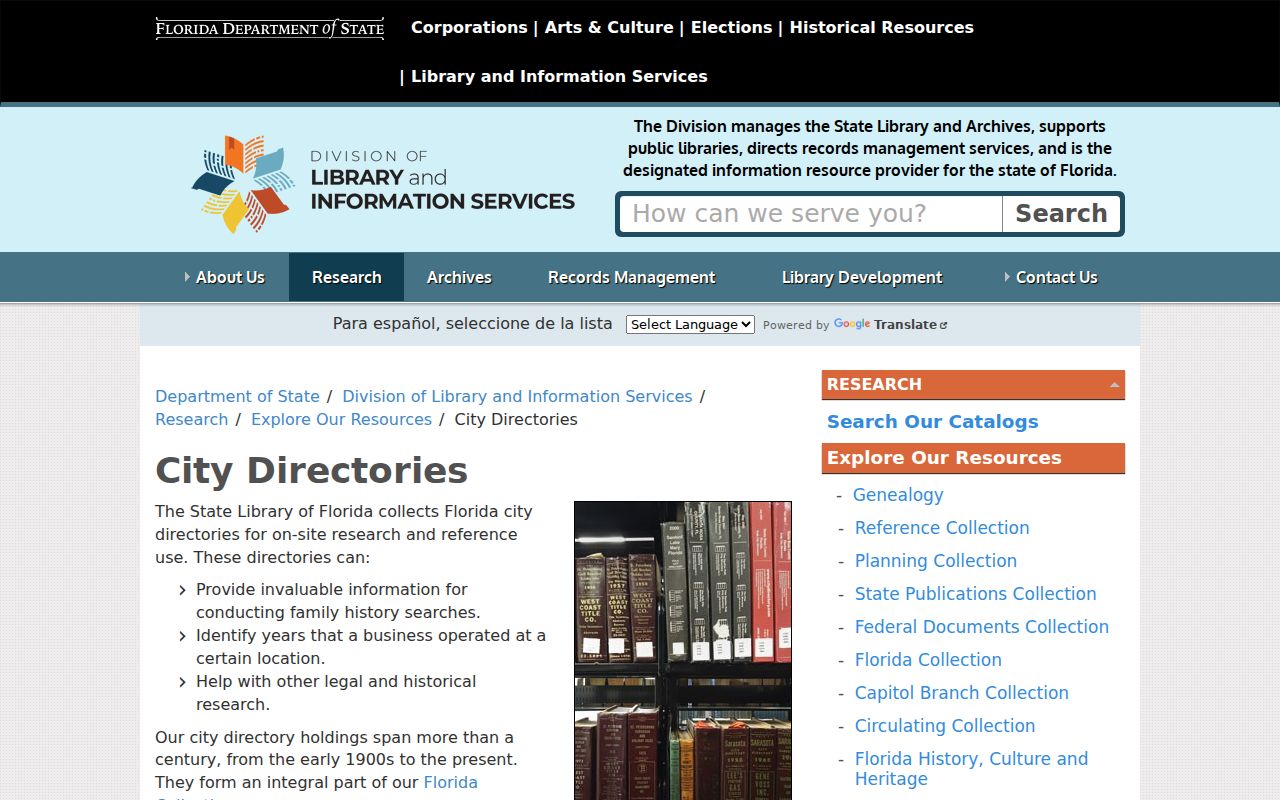
Its catalog route is useful when a local shelf list does not publish exact editions.
Ocala Directories Before Polk
The earliest directory evidence is not a full modern household roll. An 1886 East and South Florida directory includes Ocala, but it is likely strongest for businesses, trades, and place references. Use it to locate a firm or occupation, then seek a person in newspapers, tax records, probate, or land maps. Marion landownership maps survive for 1883, 1885, and 1887. The county probate collection reaches from 1844 to about 1925. Those sources bridge years before standalone Ocala city directories appear.
City borders also changed. Ocala was incorporated locally in 1868, received state approval in 1869, and initially extended only 1,000 yards from the square. A person described as being near Ocala may have been indexed under a county community. Searching only the city heading can miss that resident.
Ocala Directory Reach Expands
Later editions broadened from Ocala into Marion County. This was more than a title change. Families in named rural communities could appear in the same volume as city residents. Compare the title page and place headings before assuming every listed address sat within Ocala. The expanded directory can follow a move to a nearby town without forcing a change of source.
Record the community exactly as printed, then compare it with a county map and the edition's arrangement. An Ocala city directory entry can be an area lead rather than proof of residence inside the municipal line.
Note: A directory's geographic scope can change between editions, so save the title and contents pages along with each resident entry.
Ocala Directory Help at MCPL
Marion County Public Library Headquarters-Ocala is the main local research center at 2720 E Silver Springs Boulevard. Its genealogy and newspaper database list includes HeritageHub obituaries and death notices, archived Ocala Star-Banner text, BiblioBoard local material, and the Historic Marion County Digital Collection. The exact city directory, reverse directory, phone book, and yearbook shelf runs are not posted. Call reference staff at 352-671-8551 before a visit.
The Marion County Genealogical Society provides another channel. Volunteers attempt simple local lookups without charge, donations are welcomed, and members may receive consultation help. The Ocala FamilySearch Center supplies computers, microfilm, local books, printers, and trained assistance, although changing hours and access to affiliate images should be verified.
Reading an Ocala Directory Entry
An Ocala city directory entry can pack several facts into one short line. Expected fields include surname, given name or initial, a spouse in parentheses, widow notation, occupation, employer or business, and a residence address. Some volumes may mark ownership or add a classified listing. Check the exact symbols against that edition's key because no authenticated sample Ocala page was available to confirm one fixed set of codes.
| Name | Surname, given name, and sometimes a middle initial |
|---|---|
| Household clue | Spouse in parentheses or a widow notation |
| Work clue | Occupation, employer, or business listing |
| Place clue | Residence address as printed for that edition |
| Status mark | Possible ownership or other code defined in the volume key |
- Criss-cross directory
- A later directory section arranged by street and house number instead of surname.
- Householder index
- An address-order list that names the person associated with each listed home.
- Abbreviation key
- The volume's guide to short words and marks; save it with the entry so the codes stay clear.
Compilers often canvassed residents before the imprint year. An address in a book dated for one year may reflect information gathered during the prior year. Treat the line as a dated snapshot, then confirm it with another source.
Ocala Records After the Fire
On Thanksgiving Day in 1883, fire destroyed much of downtown and, according to the Marion County Sheriff's history, much of the area's recorded past. The first digitized Ocala Sanborn fire-insurance map followed in June 1884. That close sequence makes the map a rare view of structures soon after the loss, while later city directories provide names and trades. Neither source should be forced to prove what it does not show.
The Library of Congress Ocala map results include editions from 1884 through 1924.
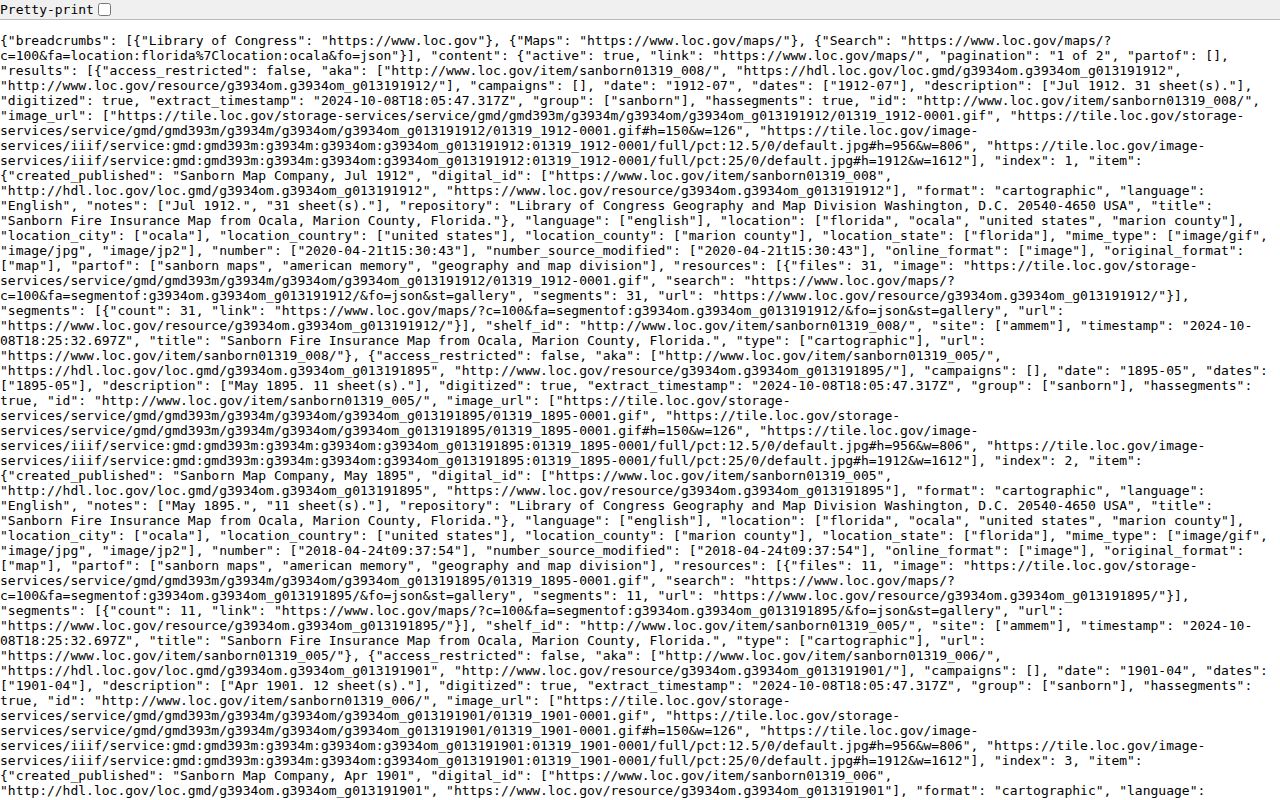
Use these maps for building footprints, materials, uses, and street labels. They do not name every occupant.
The Florida Memory record also demonstrates how a transcript can rescue early courthouse information.
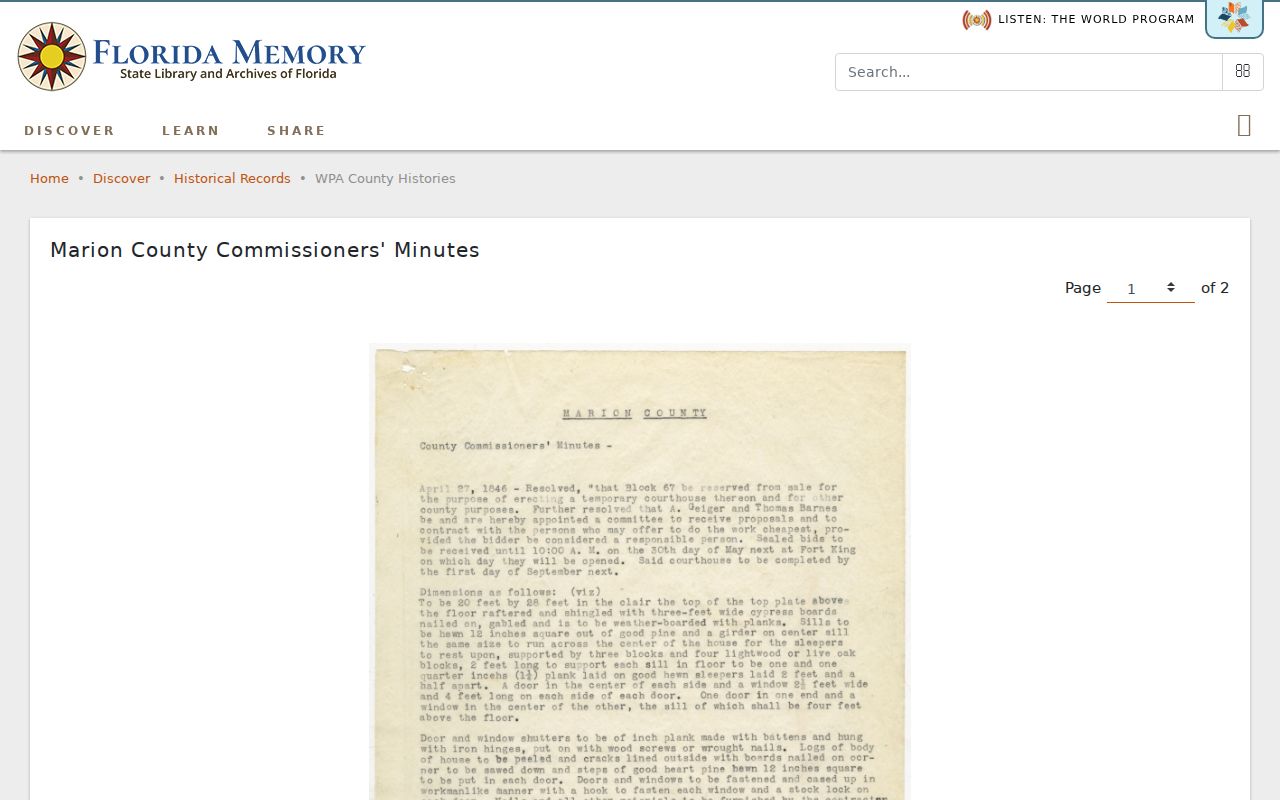
Distinguish a WPA Historical Records Survey transcript from an original record when citing an early courthouse fact.
Ocala Directories and Marti City
Around 1880, Cuban cigar workers formed Marti City between present Pine Street and Martin Luther King Jr. Boulevard. The settlement had its own government and, at its height, as many as thirteen cigar factories. The trade later shifted toward Tampa, and Marti City was largely abandoned by the turn of the century. This history provides two strong search terms: the alternate place name and the cigar trade.
Check newspapers and the 1886 regional directory when a person does not appear under a later Ocala heading. Historic occupations should only distinguish people in their own era. A trade in an old directory says nothing about a person's later work.
Ocala Residents Beyond Directory Pages
More than 1,000 photographs, postcards, and prints in the Historic Marion County Digital Collection can place a directory name beside a business, block, or event. HeritageHub and the Ocala Star-Banner archive may supply a death notice or later news. The “Ocali Country Scrapbook” adds eight narrated history segments created as a 1976 Girl Scout bicentennial project and later moved from slides and cassette to digital access.
The Historic Ocala Preservation Society introduces its preservation work and local focus.
Use preservation sources to explain a place, then return to a dated directory entry for the resident fact.
Note: Photographs and narrated memories add context, but names and dates should be checked against a directory, newspaper, deed, or probate record.
Trace Families in Ocala Directories
Follow a household across Ocala directory volumes one edition at a time. Copy the entry as printed, including spelling, spouse, work, and address. The public federal census currently runs through 1950, so it can add ages, relationships, and household members near a directory year. Deeds and the tax roll answer ownership questions. Obituaries and probate may explain why a name disappears, while a Sanborn map describes the structure rather than the people.
- Start with the closest known year and search the alphabetic surname section.
- Move backward and forward through available editions, noting the first and last appearance and each address change.
- Use an address-order section, if present, to check the house and nearby entries.
- Pair the nearest released census with the directory snapshot to test household relationships.
- Follow a break with deeds, an obituary, probate, cemetery records, or newspapers.
A missing name can mean death, a move, a spelling change, a skipped edition, or simply that the household was not listed. Do not choose one cause from absence alone. Marion County Genealogical Society volunteers may attempt a simple lookup, and the society research-help page explains its service. For a current person instead of a historic household, use the modern Ocala resident lookup workflow.